Ontario will not let new drivers go straight from a full G licence to a Class A road test after December 31, 2026. Starting January 1, 2027, applicants must first hold a full Class G licence, or a higher class that covers G vehicles, for at least six months.
The rule is set out in Ontario Regulation 186/26 under the Highway Traffic Act. The Ministry of Transportation notified the industry in a June 23, 2026 letter to stakeholders. Until now, a Class A applicant only needed to be 18 and hold a valid full G. There was no waiting period.
How the wait works
The six months do not have to be in a row. The regulation asks for at least six months of full licence time within the 12 months before the road test.
G1, G2, M, M1 and M2 licences do not count. A full G does. So do classes A(R), B, C, D, E and F, because they also allow a driver to operate G vehicles.
Drivers licensed in another province or territory can qualify a different way. They need an equivalent full licence for at least 24 of the past 36 months. Military drivers with an equivalent DND 404 permit are also covered.
The wait applies only to the full Class A licence, manual or automatic. It does not apply to the restricted A(R) licence or to other commercial classes.
Only the road test is held back. The ministry says applicants can complete the medical report, the knowledge test and mandatory entry-level training (MELT) during the six months. The regulation takes effect January 1, 2027 and governs the road test itself, so a Class A road test taken before then is not covered by it.
The province looked at longer waits. Mike Millian, president of the Private Motor Truck Council of Canada, told the Fleet Safety Council conference on October 23 that one-year and two-year periods were discussed before industry consultations settled on six months, Truck News reported.
What is already in force
The waiting period is the last of several licensing changes rolled out this year.
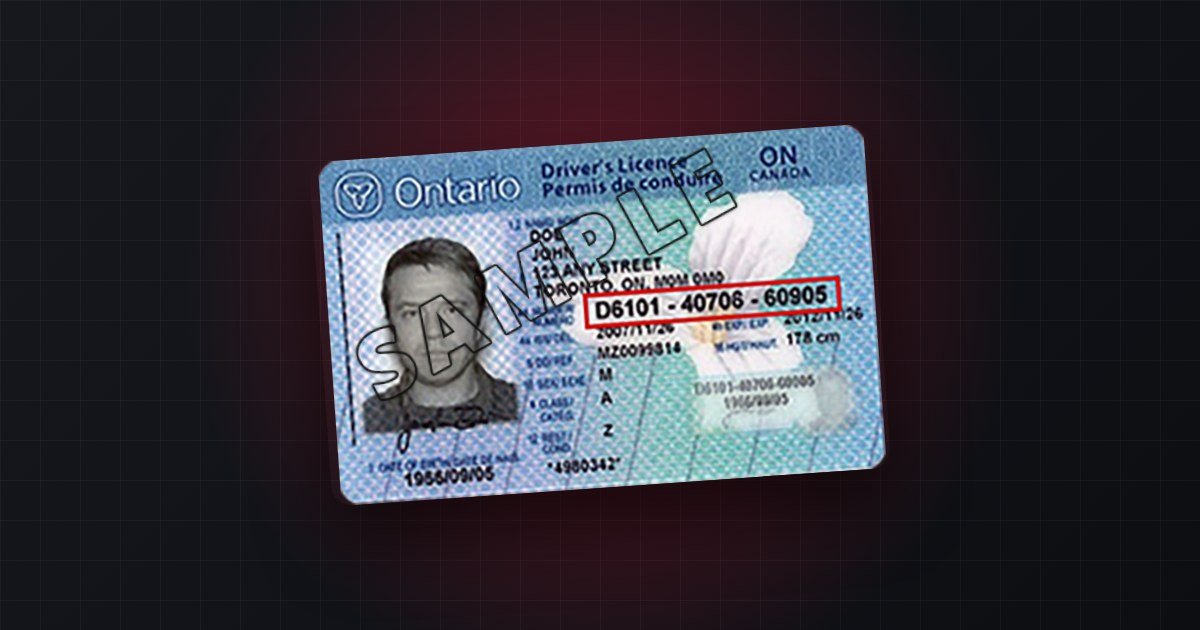
Since May 11, 2026, anyone applying for a G or M licence, or upgrading to a commercial class, must declare that Ontario is their primary residence and that their presence in Canada is legal. Commercial licences are now issued only to people authorized to work in Canada, according to a ministry notice to stakeholders.
Since July 1, 2026, drivers from countries without a licence exchange agreement with Ontario get credit for no more than 12 months of foreign driving experience. They must pass both the G2 and G road tests, with a mandatory 12-month wait between the two. For those drivers, the new six-month wait sits on top of a longer path to a full G.
Training schools are next
On September 21, Transportation Minister Prabmeet Sarkaria announced a single standard entry-level curriculum for Class A training. Every organization that teaches Class A drivers will have to follow it. The province said it will include more than 103 hours of training and take effect in 2027. Subjects include fatigue management, rural driving, human trafficking awareness and air brake training, CBC News reported.
The hours are not new. Ontario's MELT minimum is already 103.5 hours. What changes is that every school will teach one curriculum set by the province.
The province also named an integrity manager for truck driver testing. It added supervisor spot checks and weekly reviews of training schools.
Why now
The changes follow a special report on commercial truck driver training and licensing from Auditor General Shelley Spence, released May 12, 2026.
Her office sent undercover students to six truck driver training providers. Two private career colleges delivered 59.5 and 81 hours of training, short of the 103.5-hour minimum. Two of the students were not taught left turns at major intersections, reverse parking or emergency stopping. As of March 2025, 54 of the 216 registered private career colleges offering entry-level truck training had never been inspected. The report also flagged that Ontario had no mandatory wait between a passenger vehicle licence and a Class A licence.
Quebec acted first. Since July, the SAAQ has required Ontario truck drivers with less than two years of experience to pass a practical exam to work in Quebec, CBC News reported. The SAAQ has described the measures as temporary.
Sources: O. Reg. 186/26, Ontario e-Laws; Ministry of Transportation stakeholder letters of April 20 and June 23, 2026; Ontario government announcement, September 21, 2026; Office of the Auditor General of Ontario, Large Commercial Truck Driver Licensing, May 12, 2026; Truck News, PMTC regulatory update; CBC News.