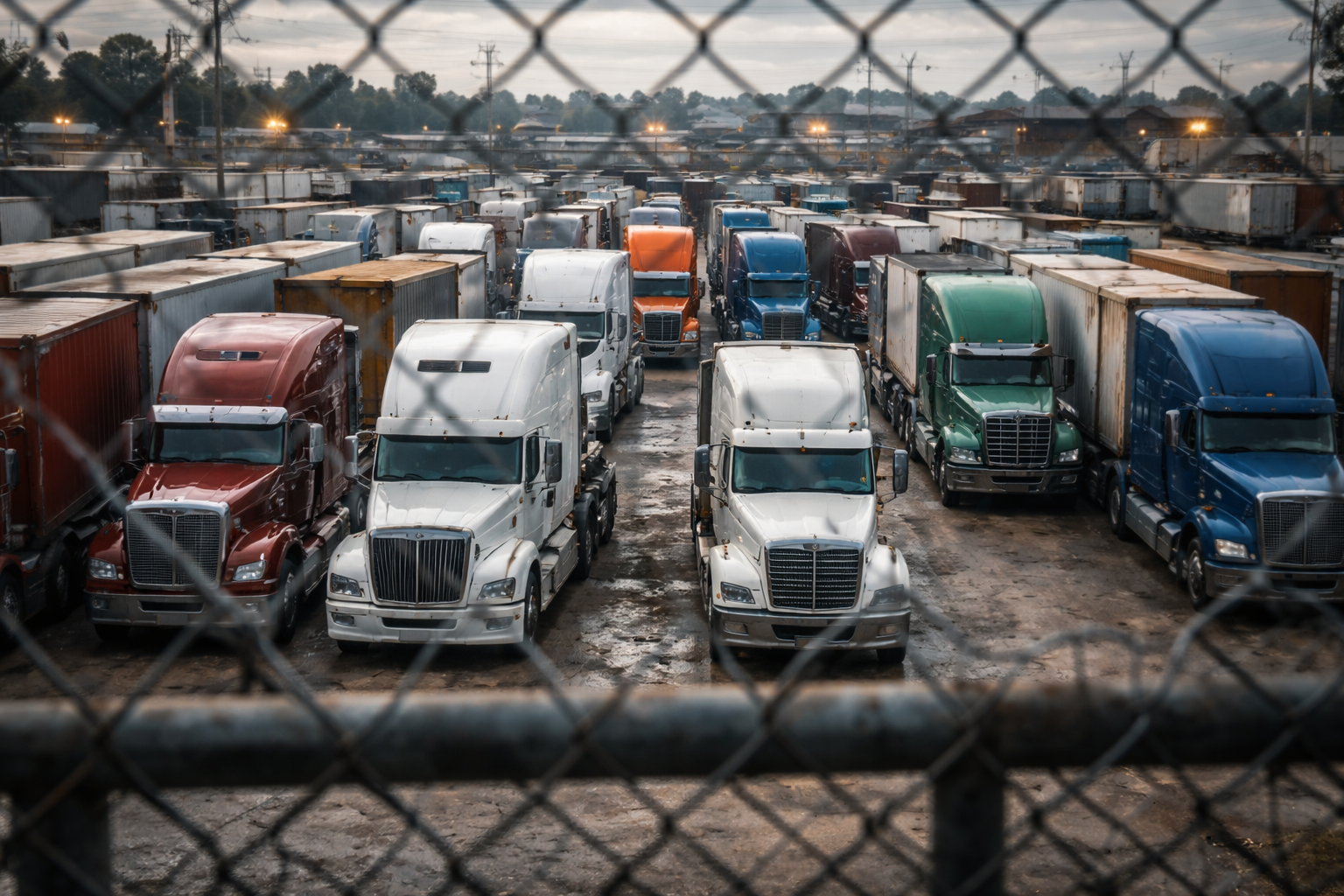
Every time freight rates spike and shippers panic, the industry reaches for the same solution: more trucks. More terminals. More equipment. More capital.
And then they wonder why capacity doesn't actually improve.
Here's the truth nobody in a boardroom wants to say out loud: trucks don't create capacity. Drivers do. And a driver is the one thing money can't simply buy.
The Equipment Is Already There
In the United States, tractor trucks already outnumber professional drivers by more than 3 to 1. The equipment exists. The freight exists. The fuel and terminals exist. What doesn't exist, in sufficient numbers, is the person willing to drive.
The U.S. is short an estimated 80,000 to 115,000 drivers right now. Canada is short 25,000 and climbing — projected to hit 55,000 by 2035. The freight industry loses an estimated $95.5 million USD every week to trucks that simply cannot move because no one is qualified or available to put them in gear.
Anyone with money can order a fleet of trucks. They can sign a terminal lease. They can build the whole physical infrastructure of a carrier in six months. And they will have zero capacity — because capacity isn't a truck. Capacity is a trained, licensed, experienced human being who chose this career and shows up every day.
The Demographic Cliff
The problem isn't just a shortage — it's a slow-motion collapse of the workforce pipeline.
The average truck driver in the U.S. is now over 48 years old. In Canada, nearly half the driver workforce is 50 or older. These drivers are retiring faster than new ones are entering. And long-haul driver turnover at large carriers routinely runs above 90% annually — meaning companies are burning through drivers constantly, not actually building a workforce.
Most of that churn isn't new capacity. It's the same drivers rotating between carriers, chasing marginally better pay or conditions. That's not industry growth. That's a staffing carousel.
Real capacity only comes from one place: a person who was not previously a professional driver deciding to become one.
Why Drivers Are Choosing Something Else
The industry keeps trying to solve this with signing bonuses. That's not the problem.
The problem is the experience. Unpaid detention time at loading docks. Impossible parking situations. Regulations that pile on without driver input. Lease agreements that extract more than they deliver. A career that asks for enormous sacrifice and doesn't always offer commensurate respect or compensation in return.
Every hour a driver sits unpaid at a dock is a message to every person watching from outside the industry. Every lease trap that bankrupts a new owner-operator is a message. These messages travel, and they shape whether the next generation ever picks up a CDL in the first place.
Capital can buy a truck. It cannot make trucking worth choosing as a life. That's determined by culture, by compensation structures, by how the industry treats the people inside it.
The Trucker Is the Infrastructure
The industry that understands this — not just in a press release, but in how it structures pay, advocates for parking, fights for fair detention compensation, and retains experienced drivers — is the industry that will have capacity when everyone else is scrambling.
You can order 500 trucks tomorrow. Without drivers, you've added debt, not capacity.
The trucks will follow the drivers. They always have.