A long-haul truck driver has lost his wrongful dismissal and unpaid overtime claims against Bison Transport Inc., but the judge who dismissed the case openly doubted whether the carrier's method of paying overtime complied with federal labour law.
The Ontario Superior Court of Justice released its decision in McCarthy v. Bison Transport Inc. on June 25, 2026. Justice R.E. Charney dismissed the claim in full.
John McCarthy was hired by Bison Transport as a long-haul driver in October 2013. He was terminated for cause in November 2017 after failing a second random drug test. He sued for wrongful dismissal and for unpaid overtime covering 2013 to 2016.
The court upheld the termination. Justice Charney found that Bison Transport's drug and alcohol policy was clearly communicated to McCarthy, understood by him, and consistently enforced. McCarthy had signed an acknowledgment at orientation, had failed a first test in 2014, and had been warned in writing that a second failure could result in termination. He did not have a drug-related disability, and no professional had ever diagnosed him with one, so no duty to accommodate arose. The court concluded the termination for cause was in accordance with the policy and that the consequences were proportionate to the breach. That portion of the ruling is a clear win for carriers operating zero-tolerance drug policies in safety-sensitive roles.
The overtime portion drew sharper comments from the judge.
McCarthy was paid by the mile. The rate was $0.38 per mile from 2013 to 2015 and $0.40 per mile in 2016. Bison Transport took the position that this mileage rate was a "blended" rate that already included overtime compensation. Stephanie Fensom, the carrier's former Manager of Safety and Compliance, stated in an affidavit that the standard mileage rate paid to McCarthy from 2013 to 2016 encompassed overtime and was intended to compensate him for any overtime he worked.
Justice Charney was not satisfied. The Canada Labour Code requires drivers to be paid 1.5 times the hourly rate for work over 60 hours in a seven-day period, under the Motor Vehicle Operators Hours of Work Regulations. In paragraph 84 of the decision, the judge wrote:
"It is not clear from the information provided by Bison Transport how this 'blended rate' complied with the Canada Labour Code's regulations requirement to pay drivers 1.5 times the hourly rate of pay for working over 60 hours in a seven day period. As far as I can tell, it did not. The Plaintiff would be paid $0.40 per mile whether he worked 55 hours per week or 65 hours per week."
Under a flat per-mile structure, additional hours worked in a week do not translate into additional pay. The more hours a driver spends loading, waiting, or sitting in traffic, the lower the effective hourly rate falls.
Despite the judge's doubts, the overtime claim failed. It did not fail because the pay was found lawful. It failed because the driver could not prove the hours he had actually worked, and because much of his claim had run out of time.
The timing problem came first. The court held that the two-year limitation period under the Limitations Act, 2002 barred all overtime claims arising more than two years before the January 2018 Statement of Claim. The judge applied a rolling limitation period, meaning a fresh two-year clock starts with each pay cheque. Every payday that overtime went unpaid was its own separate breach, and the driver had two years from each one to sue. By the time McCarthy filed, everything before 2016 had already expired. That reduced his claim from four years of alleged overtime down to a single year.
McCarthy argued that a six-year federal limitation period should apply instead, because Bison Transport is a federally regulated company. The court rejected that. The six-year period he pointed to applies to proceedings in the Federal Court, not to an action in the Ontario Superior Court, so the provincial two-year clock governed.
The surviving 2016 claim came to 743.80 hours by McCarthy's own calculation, worth $50,206.50 at his claimed rate. But the court found he had not proven even that reduced amount.
This is where proof of hours became decisive. To calculate his hours, McCarthy had taken the mileage logs Bison produced and divided the miles by a fixed average speed of 43 miles per hour, a figure drawn from research by an American company that was neither cited nor attached to his affidavit. He calculated overtime over 10-to-14-day stretches rather than the seven-day period the law requires. He acknowledged on cross-examination that he had made several arithmetic errors. The judge found the calculations seriously flawed and not a reliable basis on which to award damages.
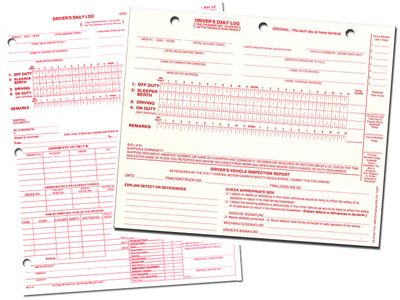
The deeper issue was that the actual hours no longer existed. Bison Transport's trucks are equipped with electronic logging devices that track hours driven, but the carrier retained that data for only six months. That six-month retention is consistent with the hours-of-service record-keeping rules under both U.S. and Canadian regulations, which set six months as the required minimum. By the time the claim reached a hearing, the granular hours data was long gone. The mileage logs and pay stubs that remained showed only miles driven and dollars paid, not hours worked. Justice Charney noted the driver could have downloaded his own hours data at any point within the six-month window while he was still employed.
The case illustrates a practical gap. A driver paid by the mile has no running tally of hours in his pay records. The hours sit in the electronic logging device, controlled by the carrier and retained for six months. A driver who suspects he is owed overtime has a narrow window to pull that data himself, and a two-year clock, running fresh from each pay cheque, to act on it. McCarthy had a judge who doubted the legality of his pay structure, and still lost, because the proof of his hours was gone and the numbers he built to replace it did not hold up.
The claim was dismissed in full. If the parties cannot agree on costs, Bison may file submissions within 20 days.
The driver lost. But the ruling leaves a marker on the pay side. Justice Charney's finding that a blended per-mile rate may not satisfy federal overtime requirements is not binding, since the overtime claim failed on other grounds. The observation is on the record, and the driver here lost not because the pay structure was found compliant, but because he could not prove the hours he had worked.
Source: McCarthy v. Bison Transport Inc., 2026 ONSC 3729 (Ontario Superior Court of Justice)