Flatbed spot rates have climbed in 12 of the past 13 weeks. They're running roughly 20% above where they sat a year ago, with the national average now pushing past $2.50 per mile on spot — and $3.14 in parts of the Midwest. That's the strongest flatbed market since August 2022.
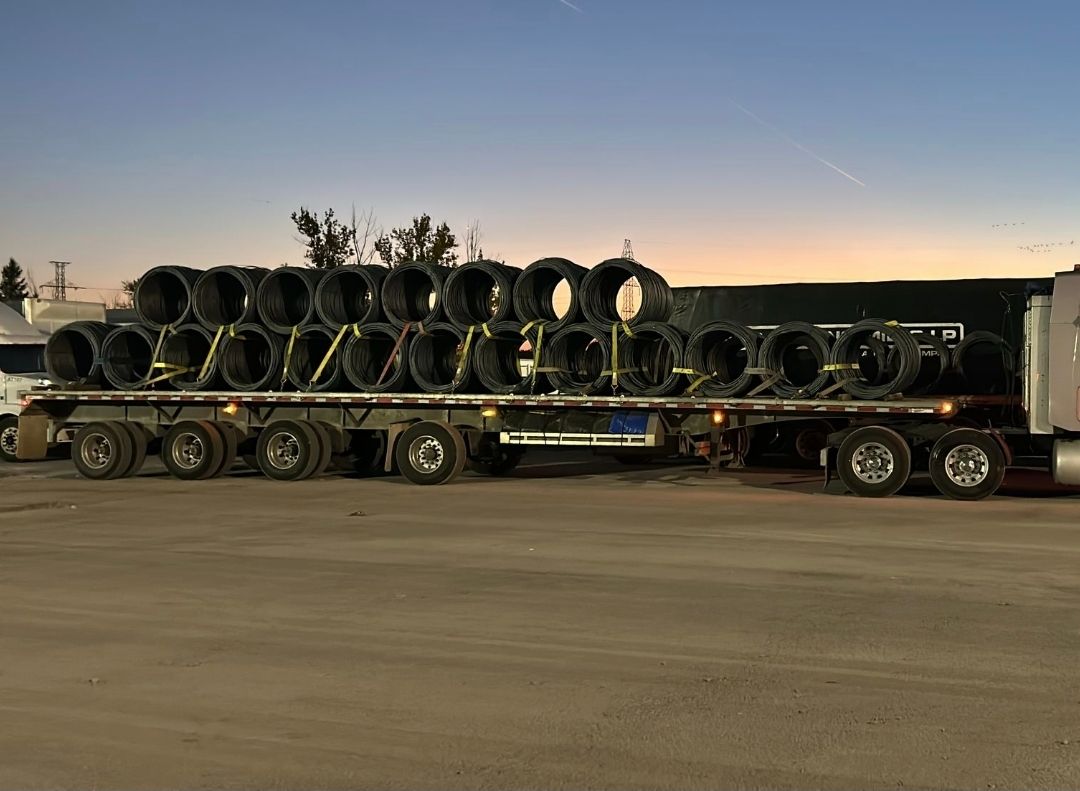
If you're hauling steel coil, lumber, machinery, or construction materials, you've felt it. Loads are moving faster. Load-to-truck ratios are tightening. Brokers are calling more than they were six months ago.
The market feels good. But before you reprice everything and start turning down freight you'd have taken without hesitation last winter, it's worth asking an honest question: what is actually driving this?
Because there are two very different answers — and only one of them signals something durable.
Two Stories That Look the Same on the Surface
A tighter flatbed market and rising rates can be explained two ways. The first is real demand recovery — manufacturing is picking up, construction projects are moving, steel output is increasing, and shippers genuinely need more trucks than are available to move real freight. The second is a supply story — capacity has left the market through carrier attrition, regulatory pressure, and economic washout, making even modest freight volumes look tight against a shrunken pool of available trucks.
Right now, both things are partially true. That's what makes this moment interesting — and why the cautious read is probably the right one.
The Demand Side: Encouraging, Not Confirmed
There are real green shoots on the demand side of the flatbed market entering 2026.
U.S. raw steel production is running modestly ahead of last year — approximately 1.78 million net tons per week versus 1.70 million in the comparable period of 2025, according to the American Iron and Steel Institute. Steel output is a leading indicator for flatbed demand, and any sustained move upward will feed through into coil moves, structural steel shipments, and industrial freight.
Data centre construction is a genuine driver that didn't exist at meaningful scale even three years ago. Since late 2022, annual U.S. data centre construction spending has roughly tripled to around $41 billion per year. That is heavy equipment, structural steel, generators, and specialized machinery — all flatbed freight. The infrastructure boom, grid upgrades, and energy projects in Texas, the Gulf Coast, and the Southeast are real and ongoing.
The cautious note: residential construction remains soft. High mortgage rates and builder oversupply have cooled lumber demand noticeably, and residential construction has historically been a significant driver of flatbed volumes. Manufacturing broadly is showing signs of life, but the recovery has not been uniform or confirmed across all sectors. Industrial demand may be coming back — but it hasn't arrived in force yet.
The Supply Side: This Is Where the Rates Are Really Coming From
Here's the less celebratory explanation for tight flatbed conditions: a significant amount of capacity has quietly left the market, and what looks like demand-driven tightness is partly just normal freight volume hitting a smaller supply of trucks.
Years of margin compression, rising insurance costs, and a prolonged freight recession that stretched through most of 2023 and 2024 pushed smaller carriers and single-truck owner-operators out permanently. Many of those trucks are not coming back regardless of what rates do. The carriers who couldn't survive on 2023 spot rates aren't waiting in a parking lot ready to re-enter when rates improve. They're gone.
On top of that, new federal rules phasing out non-domiciled CDL holders are removing a meaningful segment of the driver pool from the market — potentially over 200,000 drivers over a two-year phase-out window. The full impact of this hasn't hit yet. As enforcement tightens and licenses expire, drayage and inland capacity in particular will feel the squeeze, and that pressure ripples into adjacent markets including flatbed.
If spot rates are rising primarily because the available truck supply is smaller rather than because shippers are flooding the market with new freight, that's a fundamentally different story. It's still real money — rates are rates — but it doesn't carry the same staying power. If industrial demand doesn't materialize at scale to sustain the tighter market, the current run could plateau or soften without much warning.
What to Watch
The honest position right now is cautious optimism. The signals are constructive, but they aren't confirmed.
Watch steel output weekly. DAT and FreightWaves both track this. Sustained increases in U.S. steel production are among the clearest leading indicators of genuine flatbed demand recovery. If output keeps climbing through Q2, that's meaningful.
Watch construction starts, not just permits. Data center and infrastructure projects convert to freight when shovels go in the ground and equipment starts moving. Permits and announcements are encouraging but don't move loads. Actual groundbreakings do.
Watch the non-domiciled CDL enforcement timeline. As that capacity exits the market through 2026, the floor on rates may be structurally higher regardless of demand. That changes how you think about contract negotiations.
Be careful repricing contracts based entirely on a spot market spike. Shippers know the same things you do. They're watching rates too. If industrial demand doesn't fully materialize, the carrier who locked in long-term contracts at peak spot rates may find themselves renegotiating from a weaker position.
The Bottom Line
The flatbed market in early 2026 is genuinely tighter than it was a year ago, and the rates are real. Some of that is legitimate demand recovery — steel, infrastructure, data centres — that could build into a proper upcycle if it sustains. Some of it is a reduced carrier base making normal freight look tighter than it is.
The drivers running flatbed right now should be capitalizing on current conditions without overcommitting to the idea that the cycle has definitively turned. Take the rates. Watch the data. Stay flexible.
The market will tell you over the next two quarters whether this is the start of something or a temporary tightening with a ceiling. Right now, the smart money is somewhere between excited and skeptical — which, in freight, is usually exactly where you want to be.