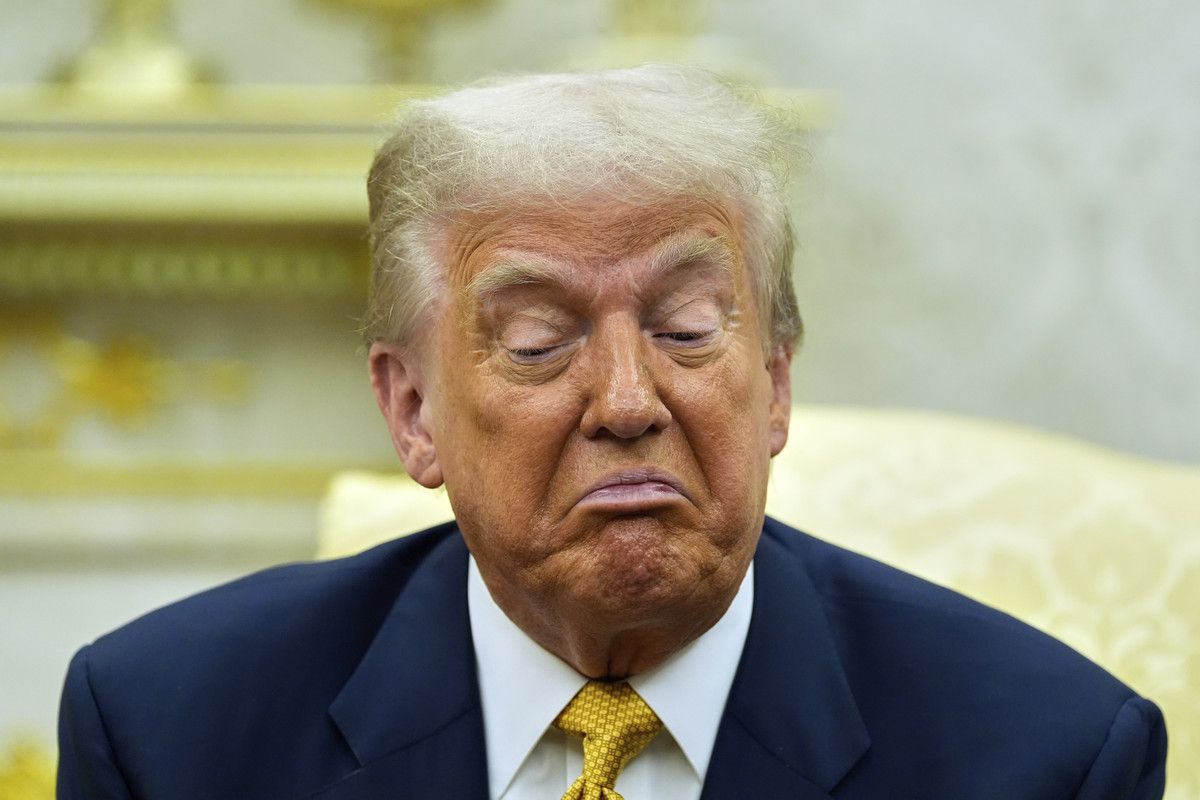
U.S. President Donald Trump says the American economy doesn't need anything from Canada or Mexico and that he is "not looking to renew" the continental trade agreement. For Canadian trucking, those words land directly on the cross-border lanes that keep fleets busy.
Trump made the remarks in the Oval Office on Wednesday when asked about the July 1 deadline tied to the Canada-U.S.-Mexico Agreement, known in Canada as CUSMA. That date marks the pact's six-year joint review. If the three countries don't agree to extend the deal, it doesn't simply end. Instead it moves to an annual review process and stays in force until its 16-year term expires in 2036, at which point it would lapse unless renewed.
The president complained about the U.S. trade deficit with Canada, which is driven largely by Canadian energy exports, and claimed the U.S. has no need for Canadian or Mexican cars, lumber or energy. He again called the former NAFTA deal "the worst trade deal ever made" and argued the U.S. economy does better when it operates on its own, adding that both Canada and Mexico need the United States more than the reverse.
Ottawa is pushing the other way. Canada-U.S. Trade Minister Dominic LeBlanc traveled to Washington last week to meet his American counterpart and has written to the U.S. and Mexican governments calling for a 16-year extension of the agreement. Mexico's secretary of economy, Marcelo Ebrard, has backed a similar extension.
Prime Minister Mark Carney said last week that Washington has "technical issues" with Mexico and roughly 30 trade issues with Canada of "varying technicality."
Saskatchewan Premier Scott Moe said Canadian leaders remain focused on securing a good deal and won't be drawn into a daily back-and-forth over headlines. "There is going to be a lot of rhetoric that will occur as we go through this review process," he told reporters in Calgary. "We won't be responding to daily comments that come out of the White House."
How much of this is negotiating posture and how much is intent is still an open question. But Trump's record gives Canadian carriers reason to take the comments seriously. Throughout his trade fights he has repeatedly acted on his own authority, imposing tariffs under national-security and emergency-powers statutes rather than waiting for Congress to legislate. That history means changes to the cross-border trade picture can arrive quickly and by presidential order, with little warning for the fleets that move the freight.
For carriers running loads between the two countries, the stakes are practical. CUSMA covers roughly $1.3 trillion in cross-border trade and shields about 90 per cent of Canada's exports from U.S. tariffs, underpinning the duty-free flow of goods that fills southbound and northbound trailers every day. The longer its future stays unsettled, with a possible 2036 cliff now on the horizon, the more that uncertainty weighs on the wider trucking and logistics industry and on the business investment decisions that depend on stable cross-border trade.