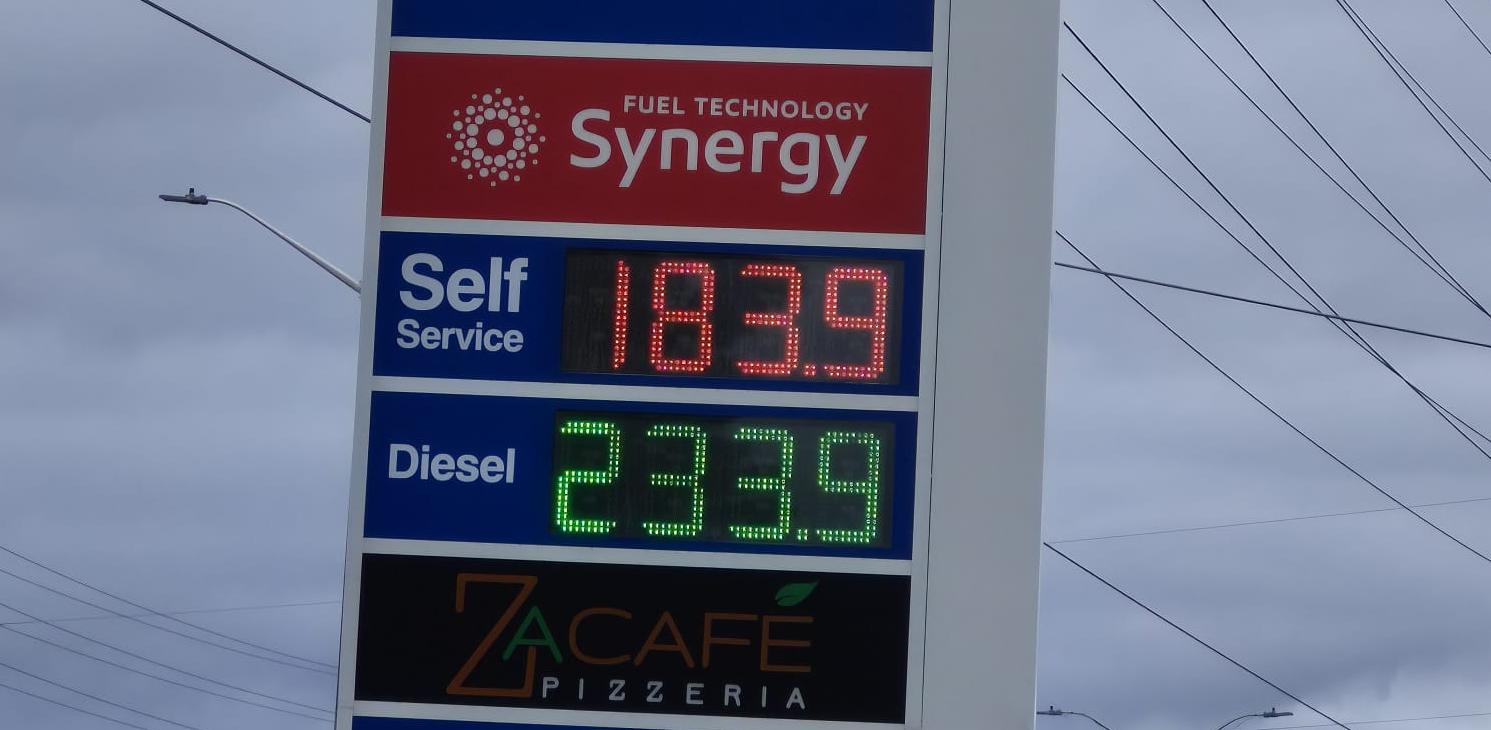
Every time diesel ticks up at the pump, large carriers lean on their contract-embedded fuel surcharge programs. The cost gets passed along, margins stay intact, and operations continue.
Independent truckers and small fleet operators don't have that luxury.
Most of them are surviving on spot freight — loads priced all-in, with no separate FSC component and no protection when fuel costs spike. What should be a shared risk across the supply chain lands squarely on the people least equipped to absorb it: the owner-operator hauling freight at 3 a.m. trying to make a truck payment by Friday.
The leverage problem
In a soft market, brokers set the table. Rates get offered, not negotiated. And when freight is slow and fixed costs — truck payments, insurance, IFTA, permits — keep stacking up, the idea of sitting on a load board waiting for a better number starts to feel like financial suicide. So truckers run. Even when the math doesn't work.
That decision, repeated across thousands of small operators, becomes a structural problem. Not a personal one.
How the spiral works
Diesel goes up. Revenue per mile stays flat or drops. Margins compress. Cash flow tightens. And when cash gets tight, desperation sets in — leading operators to take cheaper loads just to keep moving. The cycle feeds itself.
The downstream effects aren't just financial. Deferred maintenance. Skipped inspections. Longer hours to compensate for thin rates. These aren't abstract concerns — they're safety risks playing out on public highways every day.
The transparency gap
At the root of this is a rate structure problem. When fuel has no clearly defined line item in a load's pricing, it becomes an invisible cost that truckers are expected to absorb and gamble on. Meanwhile, every other node in the supply chain — brokers, shippers, 3PLs — operates with more margin stability and less exposure to fuel volatility.
That imbalance is not an accident. It's the result of a market structure that allows the weakest negotiating party to carry the most risk.
What has to change
Small carriers need to know their true cost per mile — not a rough estimate, a hard number — and stop normalizing rates that fall below it. Running cheap loads to "keep the wheels turning" is a path to insolvency dressed up as hustle.
Beyond individual operators, the industry needs to push for FSC transparency in brokered freight, not just contract lanes. Shippers and brokers need to build fuel recovery into the rate, not treat it as the trucker's problem to figure out.
The bottom line
Diesel prices will always move. That's not going to change. What can change is who bears the full cost of that volatility — and right now, it's falling almost entirely on independent operators and small fleets.
These aren't fringe players. They are the operational backbone of North American freight. But the market continues to treat them like they're expendable.
At some point, that math catches up with everyone.