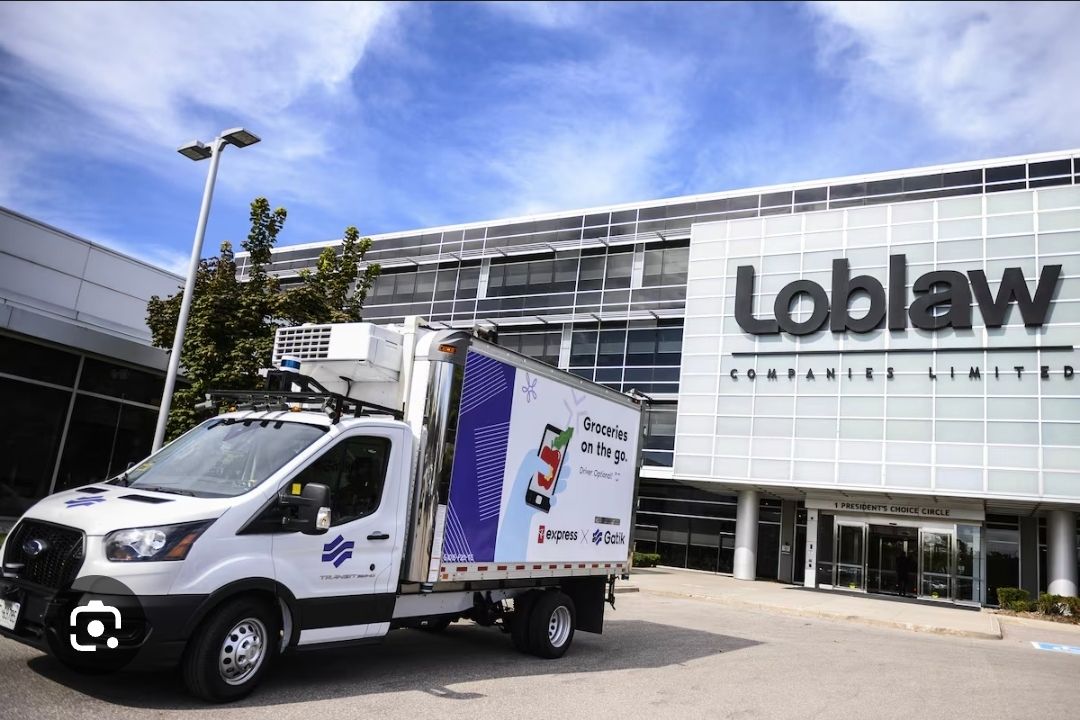
On any given weekday, a purple box truck rolls west out of Etobicoke with no one behind the wheel, carrying groceries between Toronto and Brampton. It's been doing this since 2020. Canada has quietly become one of the most active testing grounds for driverless freight on the planet — and most people have no idea.
The Players
Gatik AI has been running fully driverless trucks in the GTA for Loblaw since 2022. In September 2025, the two companies signed a five-year deal to deploy 50 autonomous trucks across Loblaw's distribution network — the largest autonomous truck rollout in North American history. Ontario's new Automated Commercial Motor Vehicle (ACMV) Pilot Program, which took effect August 1, 2025, gave Gatik's medium-duty trucks legal access to all public roads and highways in the province. That regulatory breakthrough was years in the making.
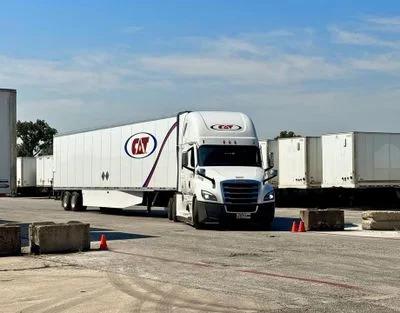
NuPort Robotics, founded in Toronto in 2019, takes a different approach: retrofitting existing fleet trucks rather than supplying its own. It's partnered with Canadian Tire on a pilot north of Toronto and has at least half a dozen trucks testing across several provinces. In December 2025, NuPort ran its most ambitious test yet — 1,200 km on Quebec forestry roads at -40°C, on unpaved terrain with simulated GPS dropout and sensor faults. The system held. If it can handle northern Quebec in winter, the 401 is manageable.
Waabi, also Toronto-based and founded by former Uber AI chief Raquel Urtasun, is arguably the most technically advanced of the three — but its trucks run in Texas, not Canada. The regulatory framework here hasn't caught up. Waabi uses a generative AI simulator instead of road miles to train its system, partnered with Volvo to launch the VNL Autonomous truck in October 2025, and landed a US$1 billion Uber deal in January 2026 to eventually deploy 25,000 robotaxis. Urtasun has publicly called on Ottawa to move faster.
What's Slowing It Down
Regulation is the biggest bottleneck. Transport Canada handles federal safety standards but provinces control road use — meaning every jurisdiction has its own rules, and most of them weren't written with a driverless 18-wheeler in mind. Ontario is leading with the ACMV program, but Quebec, Alberta, and BC haven't followed with comparable frameworks yet. A cross-country autonomous run remains legally complicated in ways the technology isn't.
Weather is a real challenge, not a talking point. Lidar scatters in heavy snow. Cameras struggle in whiteout conditions. Road markings disappear under ice for months. NuPort's Quebec winter testing suggests the middle-mile use case is solvable in Canadian conditions. Long-haul highway driving through northern Ontario in January is a different problem — one nobody has cracked at commercial scale yet.
Liability and insurance remain wide open. When a driverless truck is in a collision, the legal question of who pays — carrier, software company, OEM, sensor supplier — has no clean answer in Canadian law. Most insurers don't have underwriting models for driverless commercial vehicles and are negotiating coverage on a case-by-case basis.
When to Expect It
Right now, middle-mile urban routes in the GTA are already running driverless at commercial scale. By end of 2026, Gatik alone will have 50 trucks running daily across the GTA. NuPort is targeting public-road commercial deployment in the same window.
Beyond the GTA, meaningful expansion into other provinces is realistically a 2027–2029 story, contingent on provincial frameworks catching up to Ontario's. Long-haul autonomous freight on major corridors — Windsor to Montreal, Calgary to Edmonton — is a post-2030 conversation, not a near-term one.
The driver shortage is the strongest accelerant this technology has. Trucking HR Canada projects a gap of 40,000-plus drivers per year by 2030. Every fleet owner who can't find drivers is a future customer for this product.
For owner-operators, the near-term threat isn't direct competition — it's downstream pressure. When large retailers cut middle-mile costs through autonomous fleets, those efficiency expectations eventually shape contract negotiations with the carriers handling everything else. The autonomous truck may never run your lane. But it will change what your lane pays.