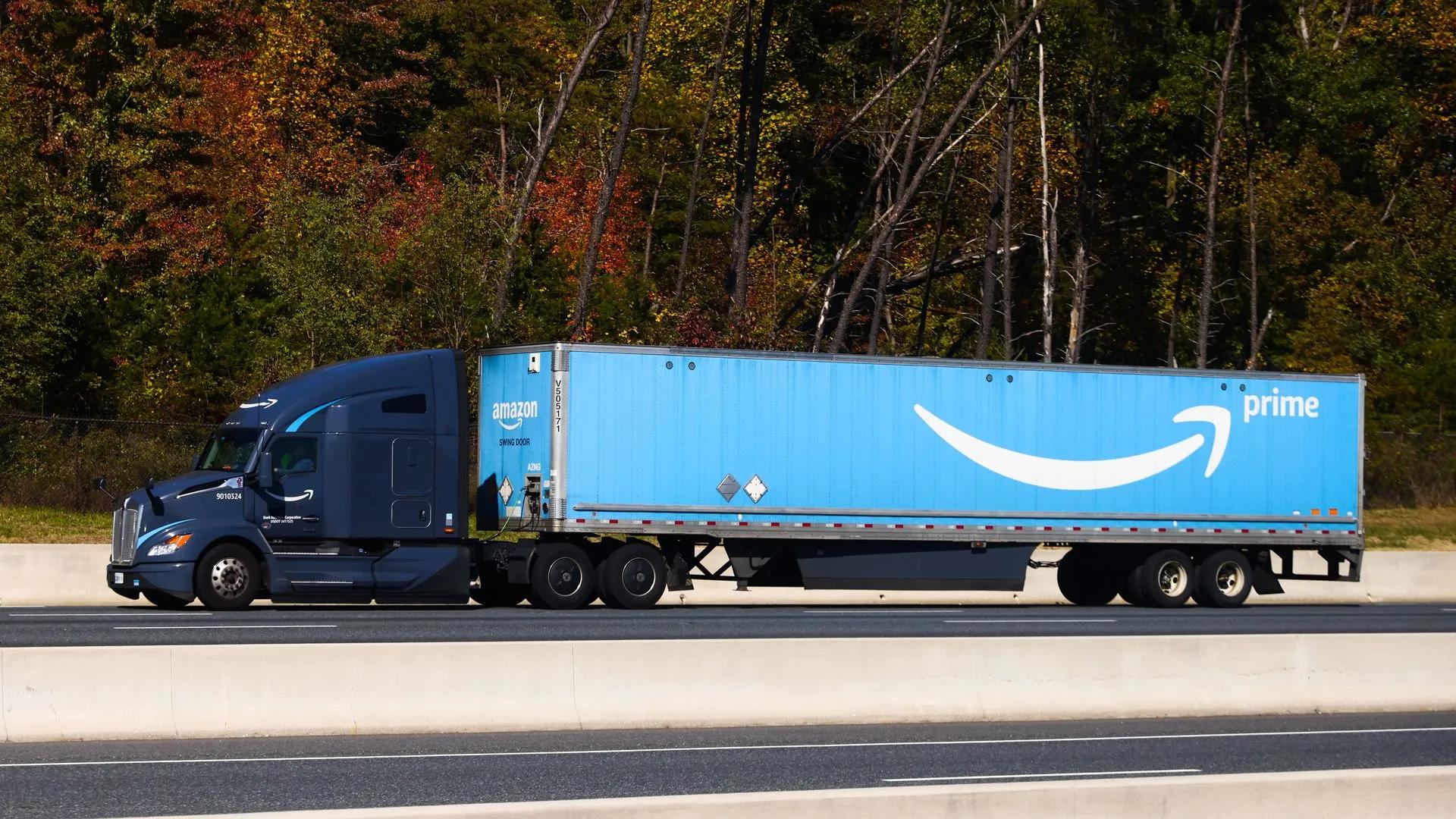
Amazon has spent more than a decade quietly building one of the largest end-to-end logistics networks in North America. The company has now stopped being quiet about it. Supply Chain by Amazon — the inbound, fulfillment, distribution, and last-mile bundle Amazon has been refining on its own marketplace — is openly available to any business, whether they sell on Amazon or not. UPS, FedEx, CH Robinson, Hub Group, RXO, and several other brokers and 3PLs all dropped on the news. The selling wasn't panic. It was repricing. Wall Street finally accepted what trucking has been watching happen in slow motion: Amazon isn't just a customer of the freight and logistics industry anymore. It's a competitor with most of the chess pieces.
This isn't a new product launch. Amazon Freight has been undercutting dry van rates for years. Amazon Logistics took huge chunks of UPS and FedEx parcel volume. Multi-Channel Fulfillment quietly served Shopify brands. AWS Supply Chain put 3PL-grade software in a cloud subscription anyone could buy. What changed is the explicit positioning. Amazon is now selling the entire stack — port to doorstep — as a single service to any company, whether they sell on Amazon or not. That was the line FedEx, UPS, CH Robinson, and the major 3PLs spent years assuming Amazon wouldn't openly cross. It's been crossed.
Why brokers should be paying close attention
Freight brokerage's two core value propositions — matching shippers with carriers, and absorbing rate spread — both run into Amazon's structural advantages. Amazon controls one side of demand: its own freight volume dwarfs every public broker on the continent, which gives Amazon Freight permanent base loads to fill back-haul with and lets it quote rates a broker structurally can't beat. Amazon also has the carriers (Amazon Relay has hundreds of thousands of carriers and owner-operators registered) and the data (AWS Supply Chain rents out the same forecasting and routing tools brokers spent a decade building into their TMS layers).
The brokerages most exposed are the mid-market generalists running dry van spot freight on standard lanes — the part of the market Amazon Freight has been building share in. The brokerages best positioned to weather this are the ones running niche or specialized freight Amazon can't standardize: chemicals, oversized, hazmat, project cargo, heavy haul, refrigerated multi-stop, white-glove install. Dedicated capacity contracts are also relatively safe, as are deep regional carrier relationships in lanes Amazon doesn't prioritize. If your brokerage has built around expertise that takes years to acquire, you have a moat. If you've built around volume on standard lanes, you don't.
Why 3PLs are in a tighter spot
3PLs sell scale and capability customers don't want to build themselves. Amazon now sells the same bundle, with the largest fulfillment footprint in North America and the most extensive last-mile network. A direct-to-consumer brand asking "do I use a 3PL or do I use Supply Chain by Amazon" is a much harder pitch for the 3PL to win than it was two years ago.
The 3PLs at most risk are e-commerce fulfillment specialists, mid-market warehousing-plus-transportation bundles, and any 3PL whose competitive moat is "we operate at a scale you can't." The 3PLs that survive are the ones running complex, regulated, or relationship-intensive freight Amazon's standardized network can't absorb: pharma cold-chain, hazmat, heavy haul, white-glove install, high-touch B2B. Same rule as brokers — niche and specialized has a moat. Commodity does not.
Where carriers and owner-operators get caught
The brokers and 3PLs being squeezed are themselves the customers of thousands of small carriers and owner-operators. When a brokerage's margins compress, the rate they pay the carrier compresses with it. When a 3PL loses a customer to Amazon, the dedicated runs that small fleet was built around can disappear. Carriers running Amazon Freight loads or Amazon middle-mile contracts already feel this. Amazon Delivery Service Partners have been making the point publicly for years: when one customer is the entire business, the customer dictates the terms.
The bottom line
Amazon opening its supply chain to all customers isn't a sudden disruption. It's the explicit naming of a threat the freight and logistics industry has been absorbing for ten years. The companies hurt fastest will be the commodity brokers and commodity 3PLs whose moats have already been eroded. The companies that survive will be the ones that built expertise, specialization, or relationships Amazon can't standardize — and the ones who structurally diversify away from Amazon-as-customer dependence before Amazon-as-competitor finishes the job.
For carriers and owner-operators, the lesson is older than this announcement and clearer than ever. If a single customer represents most of your revenue, that customer eventually owns your pricing.